


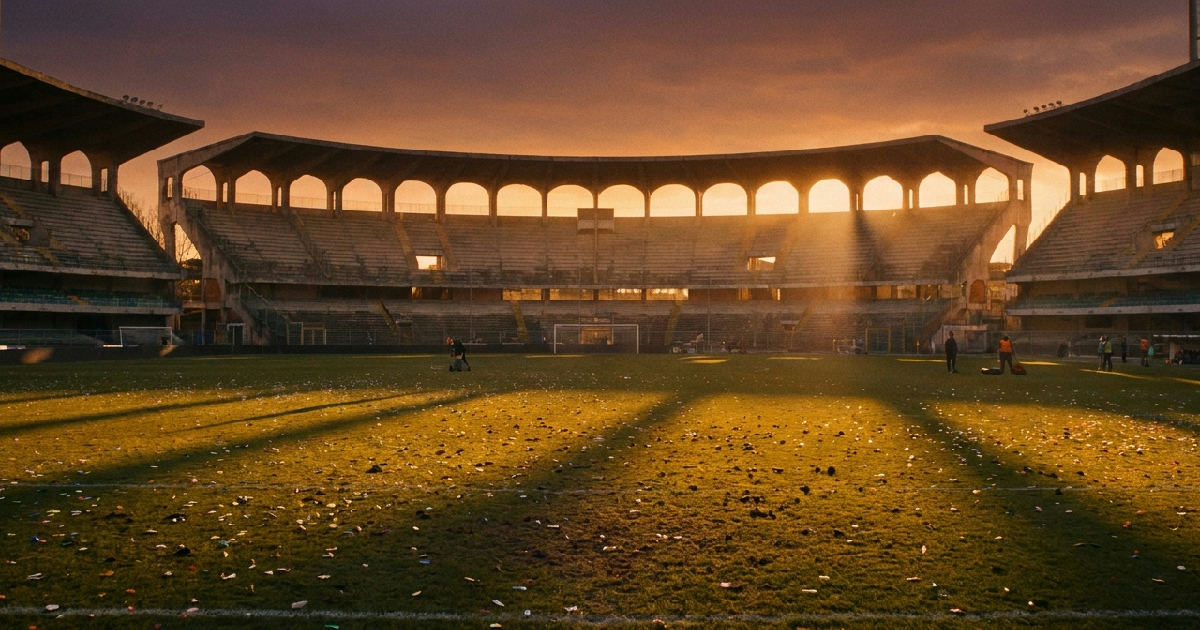
The final score was 1-0. One goal, one clean sheet, three points for Avellino. On the surface it looks straightforward. Rewind to what the data was telling us before kick-off, though, and you start to appreciate that this result required a specific kind of preparation from the home side, and a specific kind of breakdown from Modena.
What the Pre-Match Picture Told Us
The model gave Modena a 36.1% chance of winning this game. That is not a small number. At odds of 6.5, there was a meaningful edge identified in that market, and the reasoning was sound in principle. Both teams to score was rated at 56% probability. Over 2.5 goals sat at 51%. The signals pointed toward an open, competitive match with goals likely at both ends.
None of that came to pass. Avellino won 1-0. Both teams did not score. The game finished under 2.5 goals. That is the kind of result that a well-structured home side can produce when their game plan is precise and their defensive shape holds its reference points for the full ninety minutes.
The thing nobody is talking about is how disciplined Avellino must have been in their organisation. A team sitting inside the top two of Serie B does not keep a clean sheet in a match the market expected to be open by accident. That is a coaching achievement.
The Standings Context
Avellino come into this match as one of the two strongest sides in Serie B this season. Across 37 games they have won 23, drawn 10, and lost only 4, accumulating 79 points and a goal difference of plus 44. That goal difference figure, 75 scored and just 31 conceded, tells you everything about their defensive structure. They do not simply outscore opponents. They also restrict them.
Modena are the second-placed side with 78 points from 37 games, so this was a meeting at the very top of the division. Twenty-two wins, twelve draws, three defeats. A goal difference of plus 37. On paper, two of the best-organised, most consistent sides in the league going head to head. The fact that it produced a 1-0 scoreline is not a surprise to anyone who understands how top-of-the-table matches in tight leagues tend to play out. Both teams respect the opponent. Neither wants to overcommit. The margins are fine.
Watch This: The Defensive Pattern
When you look at Avellino's season-long numbers, 31 goals conceded in 37 games is a goals-against figure that places them among the most well-organised defences in the division. Keeping a clean sheet here, against a Modena side that has scored 71 goals this season, is not routine. It requires a clear structure and a clear trigger for when to press and when to hold the defensive shape.
The model expected both teams to score because both teams have the attacking output to justify that assumption across a full season. What the model cannot account for in a single match is the specific game plan a home side might deploy when the fixture has this kind of significance. Avellino were almost certainly set up to be compact, to limit Modena's movement in behind the defensive line, and to take their goal when it arrived. That is not cautious football. That is precise football.
That is a coaching issue in reverse, in the best possible way. The preparation was right. The pattern held. The detail was managed.
The Modena Side of It
For Modena, this is a result that needs examining carefully. They have been remarkably consistent all season, losing only three times in 37 matches. A defeat here, on the road against the league leaders, will sting but it does not undermine what they have built. Three losses in a full season at this level is an outstanding record.
What this match will have shown their coaching staff is where the structure under pressure has room to improve. Conceding from a side as organised as Avellino suggests there was a moment, a specific trigger, where the away defensive shape was exposed or a set piece was not dealt with cleanly. Without full event data it would be speculative to be more precise than that. What I can say is that Modena's goal concession pattern across the season, 34 against in 37 games, is still an excellent number. One difficult night does not change the picture.
What the Signals Got Right and Wrong
The BTTS signal at 56% probability did not land. The over 2.5 goals signal at 51% did not land. The Modena win signal at 36.1% did not land. Avellino won 1-0 and kept a clean sheet.
This is where a coaching lens adds something to the numbers. A 56% BTTS probability is a genuine edge over the implied 50% in the market, but in a top-of-the-table fixture between two well-organised sides, the variance around that expectation is wide. A single defensive performance that stays disciplined for ninety minutes collapses the probability completely. The model was not wrong in its assessment of the two teams over a large sample. It simply encountered a match where the specific game plan overrode the seasonal pattern.
The Modena win signal at 6.5 was the most interesting pre-match pick. A 36% probability against a 15.4% implied probability from the market is a meaningful edge. The result went against it, but that edge was real based on the information available. In the long run, identifying that kind of gap between model probability and market price is exactly where value lives. This one did not come in. The process was sound.
The Bigger Picture
With one game remaining in the Serie B season, Avellino sit top on 79 points and Modena sit second on 78. This result has direct implications for the title. Avellino have moved a point clear with the final day to come. The gap is fine enough that the final fixture matters for both sides, even if the direction of travel from this match favours the home side.
What this season has shown, for both clubs, is that sustained defensive organisation at this level is as much a coaching achievement as any attacking output. Seventy-five goals scored is visible and celebrated. Thirty-one conceded, maintained across a full season, is the quieter and often more difficult thing to build. Avellino have done both. That is why they are top of Serie B.


