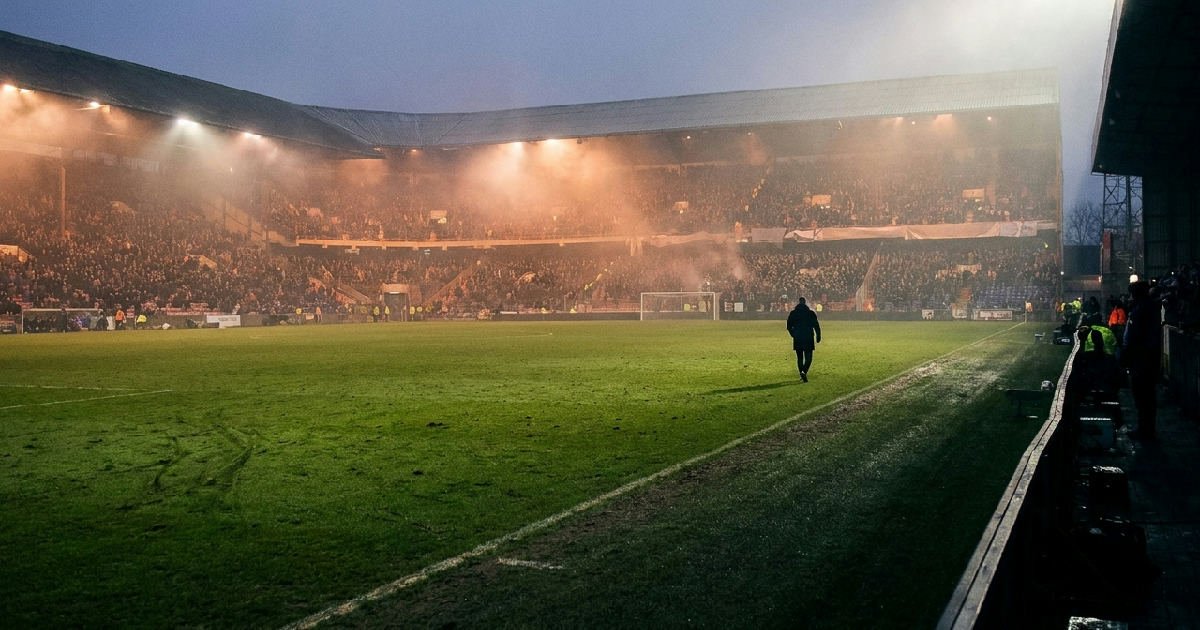
Tondela took all three points at home on Monday evening, a 2-0 victory over Moreirense that was, in the end, a fair reflection of how the match unfolded. Two goals without reply. A clean sheet. And an away side that could not find a way through a structured home defensive block. The result is straightforward to read. What sits beneath it is worth examining properly.
The Structural Picture Heading Into the Game
The context of where these two sides sit in the Liga Portugal table is important. The standings show a division with a very clear gap between the top three and the rest of the league. The team at the summit has 85 points from 33 games, losing only twice all season. The team in second has 79 points. Third place has 77 and is still unbeaten. Below that group, the division becomes considerably more compressed and considerably more unpredictable.
Tondela and Moreirense are operating in the lower half of that table, where a single result can shift a side several places. The pressure on both teams to perform is real, and that context shapes the preparation and game plan for fixtures like this one. When the stakes are about consolidation rather than title ambition, the tactical priorities shift. You protect what you have. You make yourself hard to beat first, and you build from there.
What the Result Tells Us About the Defensive Approach
A clean sheet in any professional match is never accidental. Watch this pattern across the lower half of this table and you will see that goals against figures are largely what separates teams clustered around the same points total. The team in eighteenth place has conceded 67 times in 33 games. Others around the mid-table positions have allowed between 40 and 56. Keeping the ball out of your net at this level is a genuine structural achievement, not a routine outcome.
Tondela keeping a clean sheet here suggests their defensive shape and their communication of reference points within the block worked as intended. Moreirense, as the visiting side, needed to find a trigger to break that structure down. The scoreline tells us they did not find one. That is a coaching issue to examine on their side, not a question of application or effort. The movement patterns in their attacking play were not creating the openings their game plan required.
The Thing Nobody Is Talking About: The Mid-Table Squeeze
The thing nobody is talking about in this fixture is just how tightly grouped the lower half of this division is and what that means for the preparation demands on coaches at this level. Rewind to the standings and look at positions nine through to seventeen. That is nine teams separated by just nineteen points after thirty-three games. Every fixture in that cluster has outsized importance. Every detail in the preparation matters.
A 2-0 home win in this context is not a minor result. It is a result that can shift a side clear of the danger zone or into a position of greater comfort. The preparation Tondela put in for this match, particularly around their defensive structure and their ability to stay compact and organised against an away side with something to prove, clearly paid off. That is a coaching achievement worth naming directly.
Moreirense and the Challenge of Breaking a Compact Block
For Moreirense, this defeat will require honest reflection. Two goals conceded on the road against a side from the same general area of the table is a result that hurts in a tightly contested lower half. The question their coaching staff will be working through is structural. Were the movement patterns in the final third creating genuine second phase opportunities? Were the runners finding the right lines to pull the home defensive shape out of position?
When an away side fails to score against a mid-table home team operating with a clear defensive game plan, the answer is usually found in the detail of how the attack was set up to progress the ball through the lines. If the structure ahead of the back four is not creating the right reference points for the players in possession, the attacking patterns become predictable and easy to read. That is a coaching issue to solve on the training ground before the next fixture, not a problem of individual quality.
Reviewing the Pre-Match Signals
Before kick-off, the model had identified three areas of interest in this fixture. The Under 2.5 goals signal carried a model probability of 57.7 percent against a market implied probability of 55.6 percent, a modest edge of 2.2 percent at odds of 1.80. The final score of 2-0 means the under landed, and that signal resolved successfully. The edge was narrow, as the confidence rating of 58 reflected, but the read on the game's likely scoring pattern proved correct.
The Both Teams to Score, No signal also landed. A 53 percent model probability against 52.6 percent implied was an extremely thin edge, barely worth noting as a standalone bet, and the confidence level of 53 reflected that honestly. Tondela keeping a clean sheet confirmed the outcome, but this was always a signal to treat with caution given how little separation there was between the model and the market.
The Moreirense to win signal did not land. The model had identified what appeared to be genuine value at odds of 4.00, with a 35.9 percent probability against a market implied figure of 25 percent. A 10.9 percent model edge is meaningful on paper, and the Kelly stake calculation of 0.88 units reflected that. But probability is not certainty, and this match is a reminder of why position sizing and portfolio discipline matter. Moreirense were always the less likely winner at these odds. The model flagged value, not a lock. The result went against the pick.
Final Assessment
Tondela's 2-0 win over Moreirense was built on sound defensive organisation, a clear game plan, and the kind of detail-oriented preparation that wins matches in the congested lower half of a league table. For Moreirense, the patterns that should unlock a structured defence were not present in sufficient clarity. That is the work to do before the final stretch of the season. With the table as tight as it is, there is still everything to play for. But the structure has to improve. Two goals conceded and none scored on the road is a pattern that costs points when points are the only currency that matters.