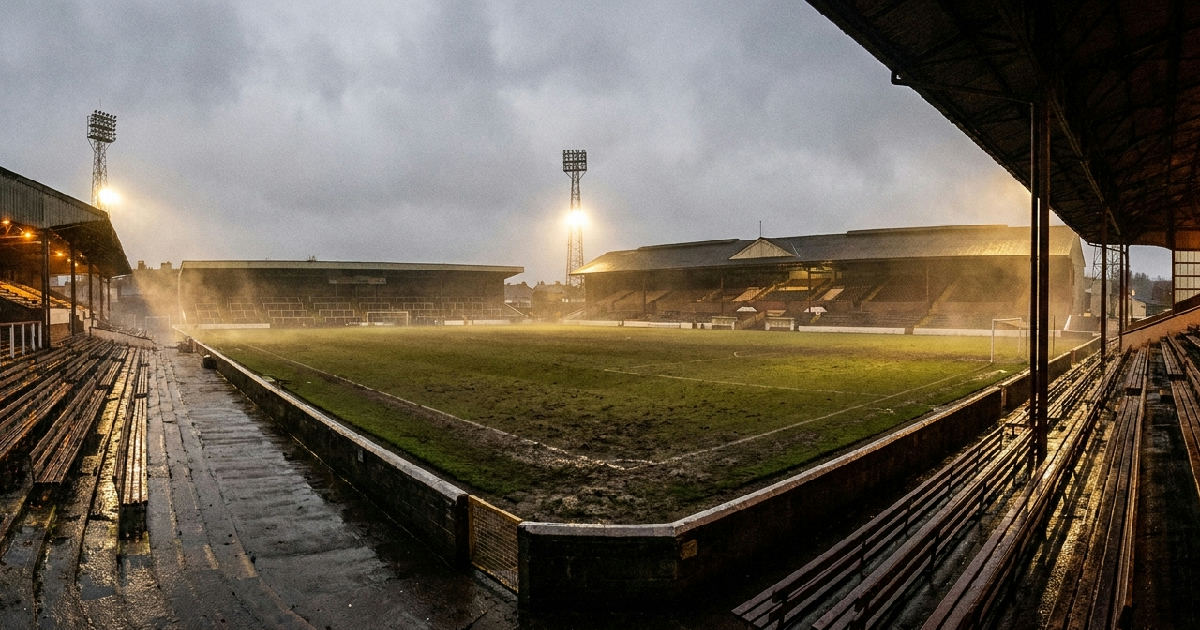
There are results in football that confirm what you already suspected, and Kilmarnock's 3-1 victory over Dundee at Rugby Park on Tuesday evening was precisely that kind of afternoon. Not a revelation, not a surprise, but a clarification. A quiet, firm statement from a side that has spent the better part of this season demonstrating that consistency and quality, when they arrive together, are very difficult things to argue with.
The Broader Picture: Where These Two Clubs Stand
To understand what happened on the pitch, you must first understand where these teams find themselves as the 2025/26 Scottish Premiership season draws toward its conclusion. After 36 matches played, Kilmarnock sit with 77 points, having won 23 times and drawn 8, conceding only 31 goals across the campaign. That goals against figure is what speaks to me most. To give away so few goals over the course of a long, demanding league season requires not just a good goalkeeper or a well-organised defensive line. It requires an entire team that understands when to press, when to hold, and when to make the opposition work for every inch. There is intelligence in that number.
Dundee, by contrast, arrive at this fixture having collected 43 points from the same 36 games, with 10 wins and 13 draws alongside 13 defeats. They have scored 48 times but conceded 59, and that negative goal difference of 11 tells the story of a side that has often found ways to contribute to their own difficulties. Forty-three points is not a desperate total. It is the total of a team that has competed on certain days and then disappeared on others, which is perhaps the most frustrating kind of season to live through from the inside.
What the 3-1 Scoreline Reveals
The scoreline, 3-1 to the home side, is honest. Kilmarnock were the better team throughout, and the fact that Dundee found a goal of their own prevents this from reading as a complete capitulation, though in truth the afternoon's direction was never in serious doubt. What I find interesting is not simply that Kilmarnock won, but the manner in which they appear to have won, which is to say with a certain composure that distinguishes the better sides in any division.
What people do not understand is that winning 3-1 at home against a mid-table side with a negative goal difference is more difficult than it sounds. There is a temptation, when the quality gap is apparent, to stop concentrating, to switch between effort and comfort, to treat the second half as a formality. The sides that accumulate 77 points do not do that. They see the game through. They add the third goal rather than settling for the second. That is a habit of mind as much as anything else, and it cannot be coached easily into a group of players. It develops over months of shared experience.
The Shape of Kilmarnock's Season
Twenty-three wins from 36 games represents a strike rate that most clubs in most leagues would be satisfied with at the top level. Coupled with only five defeats, this is a side that rarely loses and rarely draws without purpose. The 63 goals scored is a healthy attacking return, suggesting that Kilmarnock have not built their season on defensive foundations alone, which is the more admirable way to do it. To create, and to protect what you create, is the complete version of good football. The truly great teams do both simultaneously, almost without thinking about it.
There is a second-placed side in this table who have won 24 of their 36 games and accumulated 76 points, which means the title race above Kilmarnock has been genuinely competitive throughout the season. That context matters. Every point Kilmarnock have taken, including the three from this evening, has been gathered under the pressure of knowing that a side one point behind them has been equally relentless. Pressure either reveals character or removes it. Kilmarnock's points total suggests they have plenty of the former.
A Word for Dundee
I do not want to dismiss Dundee entirely, because that would be unjust. A team that scores 48 goals in a season has attacking players capable of moments of quality, and their consolation goal this evening is worth noting. It is never nothing to score against a defence as well-organised as Kilmarnock's. That goal came from somewhere, from a passage of play where someone had the intelligence to find space and the craft to use it, and that deserves acknowledgement.
But the broader picture for Dundee is one of imbalance. They have conceded 59 goals, which is simply too many for a side with serious ambitions. Somewhere in their season, probably in several of those 13 losses, there have been defensive moments where the concentration has lapsed or the structure has not held. Forty-three points is survivable in most divisions, but it is not comfortable, and the Dundee supporters will know that certain questions need to be answered before next season begins.
The Evening in Sum
Kilmarnock 3-1 Dundee is a result that will be filed away quietly among the many that have defined a very good Scottish Premiership campaign. It will not be remembered as the match that decided anything, but it may be remembered as the kind of match that champions win without drama, without fuss, without needing to be at their absolute best. In my time as a player, I learned that those victories are as important as any other. Perhaps more so. The beautiful game does not always reward the beautiful team, but on this particular Tuesday evening in Ayrshire, quality and results arrived together, which is exactly as it should be.