


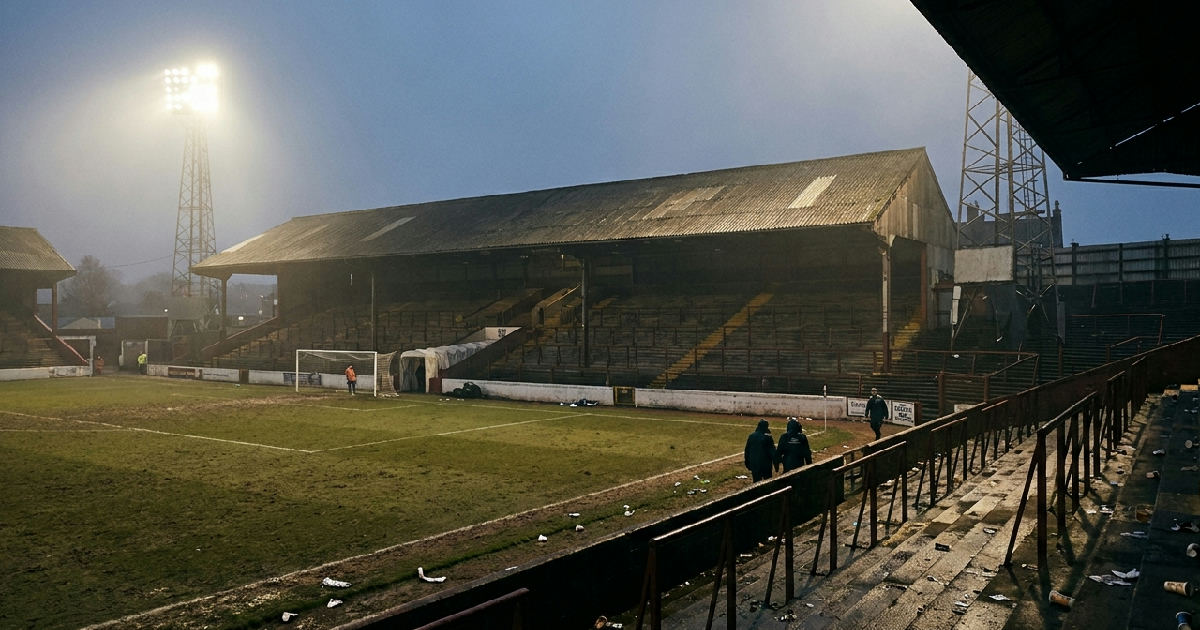
The scoreline reads 0-0 and, for many, that is where the analysis ends. Rewind to the broader context of this fixture, though, and there is considerably more to unpick. This was a game shaped by what both teams needed from it, and the pattern that emerged over ninety minutes spoke clearly to the game plans each manager had prepared.
The Context That Shaped the Game Plan
Dundee United came into this fixture sitting on 43 points from 36 games, a mid-table position that carries neither the pressure of relegation nor the incentive of a top-six push. Livingston, with 40 points and a goal difference of minus twelve, had their own reasons to be cautious. When you look at those numbers together, you begin to understand why this match unfolded the way it did.
The thing nobody is talking about is how that combination of circumstances almost guarantees a low-scoring encounter. Neither side had a structural reason to commit men forward and leave themselves exposed. Both managers, working with squads that have found goals difficult to come by at times this season, would have identified defensive solidity as the primary reference point going in. The result reflects that preparation, not a failure of execution.
What the Standings Tell Us About Defensive Organisation
Watch the season numbers for Livingston and you see a team that has conceded 59 goals in 36 matches. That is a rate that points to a back line under consistent pressure. Coming to Tannadice and keeping a clean sheet, whatever the circumstances, is not nothing for this group. It suggests a focused defensive structure on the day, one organised to limit Dundee United's access to the channels and deny clear movement in behind.
Dundee United's attacking output this season, 48 goals for in 36 games, is modest by top-half standards. The pattern there is one of a team that works hard to create but does not always convert the movement into the decisive final pass. That is a coaching issue in the sense that it is a systemic tendency rather than an individual failing on any given afternoon. The trigger moments in the final third simply did not arrive with enough regularity or precision to unlock Livingston's shape.
The Structure of the Stalemate
Rewind to how games like this are typically constructed. A team sitting at 40 points with a negative goal difference has, over the course of a season, learned to be compact. Their defensive block tends to be narrow and low, inviting wide deliveries rather than allowing through balls. That forces the home side to deliver into a crowded area where bodies and organisation can absorb the threat.
Dundee United, for their part, would have set up with enough vertical threat to pin Livingston back. But without the detail in their movement patterns to find space between the lines, the game settled into a familiar rhythm of possession without penetration. That is not a criticism of desire or application. It is a structural observation about what was and was not working in the patterns of play.
The Betting Signals in Retrospect
The pre-match signals on this fixture are worth a brief look now that the final whistle has gone. The model had rated both teams to score, No at 50.4% probability against a market-implied figure of 44.4%. That 6% edge was the largest in the signal set, and the clean sheet for both sides confirms the direction of that reading.
The Under 2.5 goals signal carried an 8.9% edge, with the model at 51.1% against a market-implied 42.2%. A goalless draw is the clearest possible confirmation of that thesis. The market was underpricing the likelihood of a low-scoring contest given the defensive tendencies and reduced motivation at either end of the table.
The draw signal, which was confirmed as a winner, sat at just 0.5% edge and a confidence of 25. That is a low-conviction pick in isolation, but the probability of 24.9% was a fair reflection of how evenly matched these two sides are when neither has a compelling reason to push. The 4.1 price represented a small edge that the result vindicated.
What This Match Means in the Larger Picture
Both teams finish this fixture where they started it in terms of the table picture, and that is precisely what the game plan demanded. Livingston's 40 points and Dundee United's 43 represent seasons of consolidation rather than ambition. Their goal differences, minus twelve and minus eleven respectively, tell you these are teams that have scrapped for points through resilience rather than flowing football.
There is nothing wrong with that. Building a defensive structure that limits the damage across 36 league games is genuinely difficult coaching work. The detail in how Livingston set up to contain Dundee United's attack today was visible in the outcome, even if the full tactical picture is not available from the data alone.
Final Thought
A 0-0 on a Tuesday evening in the Scottish Premiership is easy to dismiss. But when you place it inside the season-long structure of two mid-table sides managing their resources and protecting their points total, it becomes a coherent footballing story. Preparation produced a game that matched the context exactly. Sometimes that is exactly what a football match is supposed to be.


