





RB Leipzig vs FC St. Pauli Preview: Leipzig's Attacking Wealth Faces a St. Pauli Side Fighting for Survival
With the Bundesliga season approaching its conclusion, RB Leipzig host FC St. Pauli at the Leipzig Stadium on Saturday 9 May 2026 in a fixture that pits European ambition against relegation anxiety. Rafael Mbeki examines what this contest means and why the quality difference between these two sides tells only part of the story.


Last updated 18 April 2026. As the Bundesliga season moves into its final weeks, there are fixtures that carry the weight of everything still to be decided, and the meeting between RB Leipzig and FC St. Pauli at the Leipzig Stadium on Saturday 9 May 2026 belongs firmly in that category. This is a revised preview, and the picture has grown considerably clearer since our first assessment. What we now have is a contest between two clubs at opposite poles of this division, separated not merely by points and position but by philosophy, resource, and the kind of football each is capable of producing. That contrast, I find, is often where the most revealing stories in football are written.
The Landscape as It Stands
Leipzig sit fourth in the Bundesliga, and the numbers they carry into this fixture are striking in what they reveal about their character. Fifty-six goals scored across the season speaks to a team of genuine attacking intelligence, a team that understands space and has the quality to exploit it before defences can recover. Thirty-six goals conceded tells a more complicated story, a side that accepts a certain vulnerability in exchange for the freedom to create. There is a beauty in that trade-off when it works, and for a team sitting fourth, it has clearly worked more often than not.
FC St. Pauli arrive at the Leipzig Stadium in sixteenth position, and the arithmetic of their season is almost a mirror image of Leipzig's, simply inverted. Twenty-five goals scored. Fifty goals conceded. What people do not understand is that a goals-against figure of fifty does not simply reflect poor defending. It reflects the accumulated consequence of a team that has had to chase so many matches, that has been exposed in transition, that has found the margins of this division unforgiving at every turn. St. Pauli's situation is precarious, and no honest reading of their season suggests otherwise.
Where the Quality Difference Lives
When I look at what Leipzig have done this season, what strikes me most is not merely the volume of their goals but the manner in which a team fourth in the Bundesliga accumulates that kind of attacking output. You are talking about a side that has learned to use the ball with genuine craft, that has players capable of finding solutions in moments when lesser teams would simply recycle possession and wait. Fifty-six goals across a league campaign means you are scoring, on average, well over two goals per match. That kind of consistency requires intelligence from multiple positions, not just from your most obvious attacking talents.
St. Pauli, by contrast, have managed twenty-five goals, a figure that tells you something about how difficult they have found it to impose themselves on any match. In my time as a striker, I played for sides that spent entire seasons scratching for goals against organised, motivated opposition. You can coach shape. You can coach structure. What you cannot coach is the instinctive brilliance that turns half a chance into a goal, and when a team scores only twenty-five times in a season, you begin to understand how rarely that instinct has surfaced.
The Story of These Two Goal Records
There is a fascinating conversation to be had about what these two sets of numbers mean when they collide. Leipzig have scored fifty-six and conceded thirty-six. St. Pauli have scored twenty-five and conceded fifty. If you were to distil each club's season into a single image, Leipzig would be a team playing with its handbrake gently released, willing to give something away in order to take something back. St. Pauli would be a team that has found the giving-away far easier than the taking-back.
The beautiful game does not always reward the beautiful team, and I will always acknowledge that tension. But when the gulf in attacking quality is this pronounced, when one side has more than double the goals of the other, the romantic in me must make way for the realist. Leipzig's offensive brilliance has been consistent enough across this season to earn genuine respect, not simply as a statistical fact but as a demonstration of sustained craft.
What St. Pauli Must Do
If St. Pauli are to leave Leipzig with anything, they will need to do something that has eluded them for much of this season: they will need to be disciplined enough to stay compact, patient enough to absorb pressure without conceding their shape, and then clinical enough to convert on the rare occasions when they break forward. That is an enormous ask. It demands collective awareness of a very high order, the kind of tactical intelligence that keeps eleven players connected and committed even when the tide of a match is moving against them.
What people do not understand is that defending well against a team like Leipzig is not simply about staying behind the ball. It is about reading movement, anticipating the timing of runs, and making decisions quickly enough to close space before it becomes dangerous. Against a side that has demonstrated, across fifty-six goals' worth of evidence, that they can find that space consistently, St. Pauli's task is as difficult as any they will face in the remaining weeks of this campaign.
European Ambition as Motivation
Fourth position carries its own significance for Leipzig. The arithmetic of European qualification varies by season and by cup results across the continent, but a side sitting fourth with matches remaining is a side very much in the conversation for European football. That conversation brings its own pressure and its own motivation. In my experience, clubs chasing European places in the final weeks of a season play with a particular intensity, a sharpness that comes from understanding exactly what is at stake. Leipzig will not treat this fixture as anything other than an opportunity to accumulate points and, in doing so, maintain the attacking momentum that has defined their season.
The Occasion and What It Means
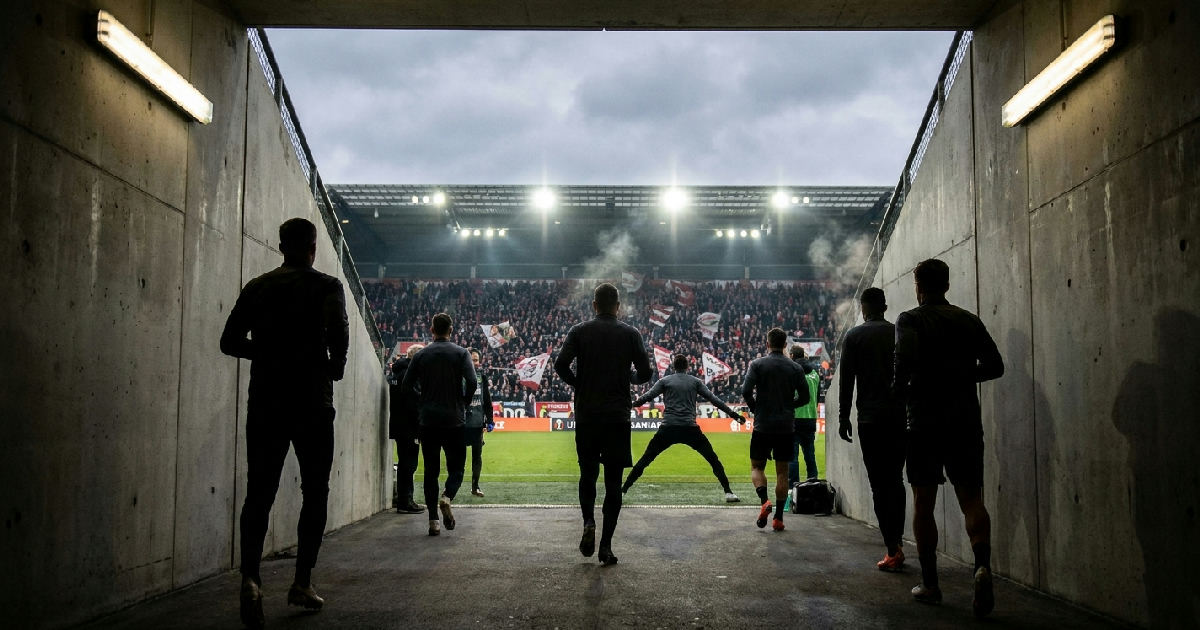
The Leipzig Stadium will be a charged environment on Saturday 9 May. Home support for a side with genuine European aspirations, facing opponents who represent exactly the kind of opportunity to consolidate a top-four position. For St. Pauli, the atmosphere will be one more obstacle to navigate, one more test of whether this group of players has the mental strength to find something in a fixture where the weight of expectation sits entirely on the other side.
I look forward to this match with genuine curiosity. The gap in quality is real, and I will not pretend otherwise. But football has a wonderful habit of producing moments that defy the logic of the numbers, and if St. Pauli find even a fragment of the craft and timing they have lacked for most of this season, there may yet be a story here worth telling.
Related: Form: RB Leipzig · Form: FC St. Pauli · Head-to-head: RB Leipzig vs FC St. Pauli
Match data, form summaries, and head-to-head records are sourced from SportSignals’ proprietary AI analysis engine.
Frequently Asked Questions
Where is the RB Leipzig vs FC St. Pauli match being played?
The match takes place at the Leipzig Stadium on Saturday 9 May 2026.
What are the current league positions of RB Leipzig and FC St. Pauli?
RB Leipzig are fourth in the Bundesliga heading into this fixture, having scored 56 goals and conceded 36 across the season. FC St. Pauli are sixteenth, with 25 goals scored and 50 conceded.
What is at stake for each side in this Bundesliga fixture?
RB Leipzig are pushing for a European qualification position and will want to maintain momentum in the final weeks of the season. FC St. Pauli are in the lower reaches of the table and need points to address their difficult position in the standings.