Scotland vs. Greece: High Stakes Clash at Hampden Unveiled!

– 2 min read

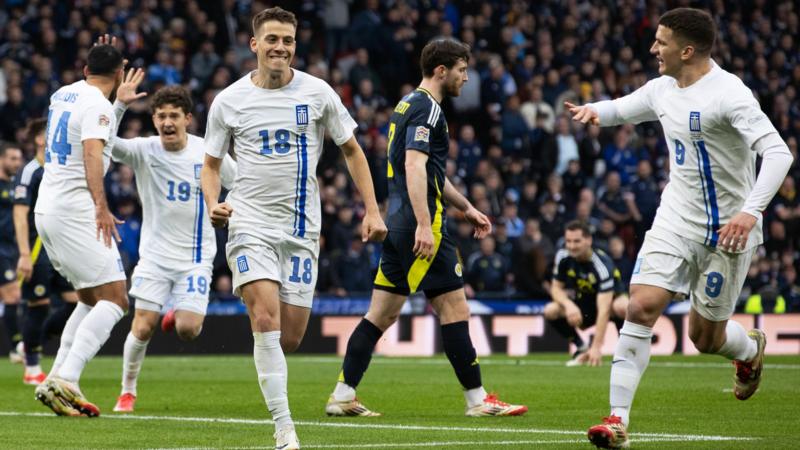
In the unpredictable whirlwind of European football, fortunes can change as swiftly as the wind. Greece’s national football team is a poignant example of this turbulent nature, showcasing dramatically different performances in recent matches that have left fans and analysts scratching their heads. One moment, they are delivering a stunning 3-0 victory against Scotland at Hampden Park, and in the blink of an eye, they find themselves on the losing end by the same scoreline against Denmark. This stark contrast poses an intriguing question: which version of the Greece team will turn up when they again face Scotland this coming Thursday?
The Greece team that walked onto the pitch against Scotland earlier sparkled with aggressive attacking football and tactical discipline, surprising many, given their previous inconsistencies. Striker Tasos Bakasetas led from the front, displaying commendable skill and leadership that underpinned the team's commanding win. Their solid defense, quick transitions in midfield, and sharp execution up front demonstrated a level of play that could easily make them contenders in any international matchup.
However, just days later, against Denmark, it seemed a completely different team had shown up. The cohesiveness and flair displayed previously were conspicuously absent, as Denmark dominated the game from start to finish. The Greeks struggled to maintain possession, their defensive line crumbled under pressure, and the midfield failed to disrupt Denmark’s rhythm, leading to a 3-0 loss that was as emphatic as their previous win.
This roller-coaster performance is reflective of Greece’s football journey in recent years. Since their surprising win at Euro 2004, Greek football has faced a slew of ups and downs, never quite maintaining a steady level of performance. The inconsistency could be attributed to several factors, including managerial changes, the lack of a stable player selection, and an inability to renew the squad with younger, dynamic talents which other national teams have successfully managed.
In light of this, the upcoming fixture against Scotland carries added significance. It serves not just as a rematch but also as an opportunity for Greece to prove their ability to bounce back and compete consistently at a high level. For Scotland, the defeat they suffered at home was a wake-up call, and they will be eager to set the record straight. Under the leadership of Steve Clarke, Scotland has been making steady progress, blending experienced campaigners with emerging talents like Billy Gilmour and Nathan Patterson, aiming to build a team capable of competing with the best in Europe.
The key for Greece lies in finding stability and rekindling the strategic discipline they exhibited in Glasgow. Returning to a robust defensive setup, creating opportunities on the counter-attack, and perhaps most importantly, playing with the passion and unity that has epitomized the spirit of Greek football in its best moments, could be the formula to replicate their prior success when they re-encounter the Scots.
As both teams prepare to meet, the talk is not just about tactics and player performances. It's also about pride and proving points; Greece wants to show that their victory against Scotland was no fluke, and Scotland is motivated to demonstrate their resilience and capability to recover from setbacks. Such dynamics set the stage for what promises to be a fascinating encounter filled with not just skilled football but also compelling narratives of redemption and resolve.
As fans eagerly await the next clash, the question remains open — will the triumphant Greeks make a reprise, or will the shadows of their defeat to Denmark linger? One thing is certain; the unpredictability adds an extra layer of excitement to the spectacle, reminding us of why we love the beautiful game.