Salah's Surprising 'Little Problem' Causes Stir at Liverpool

– 3 min read

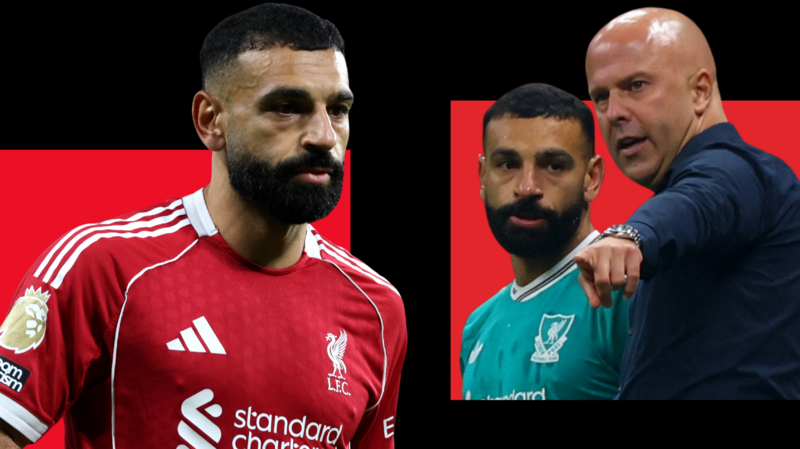
Danny Murphy, the former Liverpool midfielder turned Match of the Day pundit, has recently highlighted a noticeable flaw in the otherwise sparkling armor of Liverpool's star forward, Mohamed Salah. While Salah's offensive prowess is undeniable, with a record that speaks volumes about his ability to find the back of the net, Murphy has pointed out an area where his game could be affecting the team negatively: his defensive contributions.
Murphy's analysis comes at a crucial time for Liverpool, as the team has been experiencing unusual fluctuations in their performance, particularly on the defensive front. In focusing on Salah, Murphy noted that the Egyptian's reluctance or inability to consistently track back and assist in defensive duties has exposed Liverpool’s right flank to more danger than manager Jürgen Klopp would prefer.
To understand the full impact of this, it's essential to consider Salah’s role in the team. Positioned primarily as a forward, his primary duty is indeed to score and set up goals. Last season, Salah dazzled the Premier League with 23 goals, continuing to establish himself as one of the world's elite forwards. However, football, particularly at the highest level such as the Premier League, requires a holistic approach to both offensive and defensive play.
The issue on the right flank becomes particularly pronounced given the way Klopp likes his team to play. Liverpool’s system under Klopp has been admired for its vigorous press and the ability of the forwards to initiate this press. The front players, including Salah, are often the first line of defense, tasked with putting pressure on opposing defenders to win the ball back high up the pitch. This system worked wonders in previous seasons, adding dynamism and an element of surprise to Liverpool's gameplay.
However, this season, Salah has been observed spending more time staying forward, waiting for counter-attack opportunities, and less time participating in the press. This change in dynamics has not only increased the workload for the midfielders and fullbacks but also left noticeable gaps that opponents have been able to exploit. Trent Alexander-Arnold, Liverpool’s right-back known for his offensive skills, often moves up the pitch to join attacks, relying on cover from his winger, which in many matches should be Salah.
Defensively, these gaps have been costly. Instances where opponents have broken through Liverpool's right flank have led to dangerous situations and goals that could have been potentially avoided with more robust defensive teamwork. This shift has not only put Liverpool’s defensive record under scrutiny but also raised questions about the sustainability of relying heavily on attacking tactics without a balanced defensive strategy.
Murphy suggests that Salah's defensive efforts—or lack thereof—are not merely a personal oversight but could signify a tactical shift by Klopp or perhaps an understanding that conserving Salah’s energy for offensive bursts is more crucial. Nonetheless, it’s a tactical gamble that has its risks, as evident in some of Liverpool’s recent games where they have looked more vulnerable than usual.
The solution to this problem isn’t straightforward. It involves either Salah adjusting his game to contribute more defensively or Klopp rethinking his strategies to provide more cover for the right flank, perhaps by adjusting the roles of the midfielders or the positioning of Alexander-Arnold.
As the season progresses, it will be interesting to see how Klopp addresses this issue. Will Salah's defensive duties be emphasized more, or will Liverpool adapt their formation or personnel around him to ensure greater defensive solidity? Whatever the choice, it’s clear that balancing the exceptional talents of Salah on the attack with his responsibilities on defense will be pivotal in Liverpool's pursuit of both domestic and European success this season.