Premier League Embraces Exciting New Kick-Off Trend: Football or Rugby?

– 3 min read

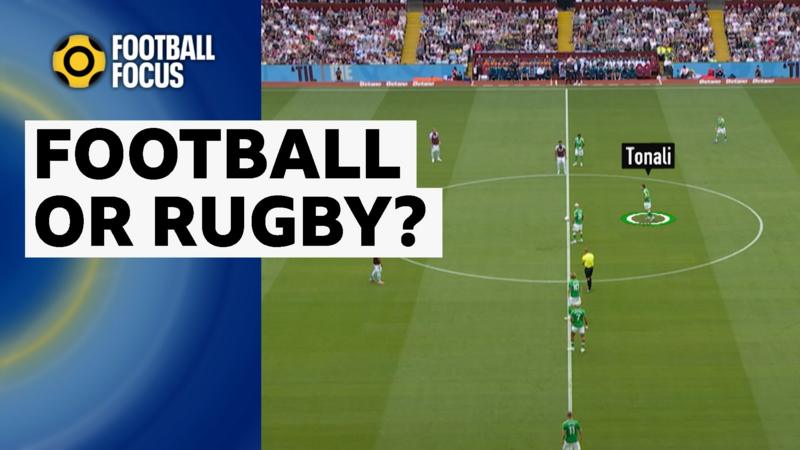
In an age where technical prowess and strategic nuances are more pronounced than ever in football, it appears there's a curious trend gaining traction among teams: the long-ball kick-off. In a recent discussion featuring media personalities and former footballers Alex Scott, Steph Houghton, and Chris Sutton, aspects of this fascinating tactical switch were delved into, shedding light on why more teams are sending kick-offs straight into the final third or, sometimes, directly out of play.
Traditionally, the kick-off was seen as a formality, a gentle roll of the ball to a teammate close by, before building an attack with a methodical approach. However, the evolution of football strategies has seemingly transformed even this most predictable part of the game into a battlefield of wits.
Alex Scott, known for her incisive analysis, suggests that this trend can be partly explained by the influence of pressing styles in modern football. Teams under pressure to reclaim possession quickly see the kick-off as the first opportunity to force their opponents into a mistake. By launching the ball deep into enemy territory, teams can immediately put pressure on their opponents, setting the tone and tempo from the very start.
Steph Houghton, with her extensive experience in defense, highlighted the psychological and tactical advantages of such an approach. According to Houghton, sending the ball long can disrupt the defensive organization of the opposing team right from the whistle. It’s a way to test the waters, see how the opposition handles surprise, and perhaps even snag an early aerial challenge or create a scoring opportunity from a defensive mishap.
From a psychological viewpoint, Chris Sutton pointed out the shift in mindset this strategy demands from players. The traditional slow start to the game, where players find their rhythm and ease into the full ninety minutes, is replaced by immediate high stakes. This can increase adrenaline and focus, but also risks early fatigue or errors under pressure. Sutton also added that kicking the ball out of play intentionally often leads to a psychological warfare where the executing team hopes to display dominance or unsettle their opponent right from the outset.
Furthermore, this approach also reflects advancements in set-piece training. Teams more confident in their structured play are likely to benefit from situations that resemble set-pieces, like throw-ins near the opponents' goal. Concentrated training on such scenarios can make them as routine and potentially rewarding as corner kicks or free kicks.
This strategy, however, is not without its critics. Purists argue that it undermines the artistry of the game, reducing the beautiful game to a series of calculated gambles and long balls. Moreover, the risk of conceding possession straight from kick-off can backfire spectacularly, giving the opponent a chance to build from the back with the ball already in an advanced position.
Despite differing opinions on the matter, the fact remains that football is continuously evolving. As tactics become more refined and teams look to exploit every possible advantage, even the opening seconds of the match are up for tactical innovation. Whether this trend will stick or evolve into another form remains to be seen. But for now, it's clear that the long-ball kick-off is more than just a kick into the abyss; it's a calculated move crafted by the tactical masterminds of football to tilt the scales of the game from the very first second.
As the season progresses, it will be intriguing to see how widely adopted this strategy becomes and whether it will indeed redefine kick-offs in the years to come. With insights from seasoned professionals like Scott, Houghton, and Sutton, fans and players alike are given a peek into the tactical evolution unfolding at the heart of the sport they love.