Haaland's Shock Early Return from International Duty: Reasons Revealed

– 3 min read

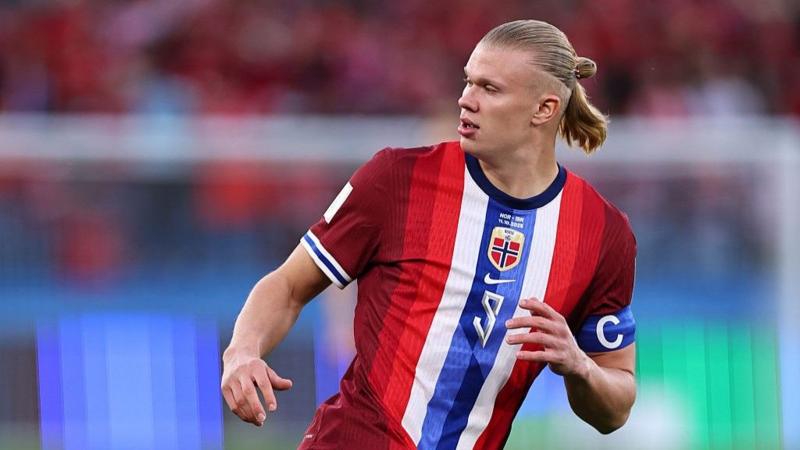
Erling Haaland, Manchester City's phenomenal striker, has made an early return from international duty, a move that has sparked curiosity and concern among fans and football pundits alike. The towering Norwegian has been in scintillating form for City, catapulting the team to the top of the league with his goal-scoring prowess. But his unexpected return to Manchester ahead of schedule begs the question: why has one of football's brightest stars left the international scene temporarily?
To understand the nuances of this development, it's essential to consider several factors that could have influenced Haaland and the Norwegian national team's decision. First, the physical demands on Haaland have been intense this season. At his club, Manchester City, he is not merely a player but a keystone in Pep Guardiola's tactical setup, bearing the responsibility of turning chances into goals. The Premier League, known for its high tempo and physicality, can take a toll on any player, and Haaland, despite his robust frame and athletic prowess, is no exception.
Second, the strategic interests of Manchester City and the Norwegian national team could potentially align here. With important fixtures on the horizon for City, including domestic league matches and critical UEFA Champions League encounters, having Haaland in peak physical condition is paramount. An early withdrawal from international duties, especially in a non-critical context, can serve as a preventive measure against potential injuries or fatigue. This kind of strategic player management is becoming increasingly common as the calendar for international and club fixtures grows ever more congested.
Moreover, the nature of the international break itself provides clues. Often, these breaks are used for friendly matches or less pivotal competitive games. Teams sometimes make accommodations for players based on their physical and mental fatigue levels, and negotiations between national team coaches and club managers are routine. Norway’s setup under coach Ståle Solbakken is very understanding and player-centric, which might have influenced the decision, allowing Haaland to skip the lesser crucial matches to manage his health and readiness for upcoming club commitments.
The response from fans and the football community has been mixed, veering from concern over Haaland’s physical state to appreciation for the long-term thinking demonstrated by both Manchester City and the Norwegian national team. Managing a player’s health is pivotal, not just for the immediate impact he can make in ensuing games but also for his overall career longevity. The football landscape is littered with stories of players who, pushed too hard, ended up sidelined with injuries that could have been mitigated with better management.
But even as he returns early, Haaland’s season thus far has been nothing short of astonishing. With a natural knack for finding the back of the net, his adaptation to the English top-flight has been seamless, defying the traditional expectations placed on newcomers to the Premier League. His physicality, coupled with a rare blend of speed and technical skill, makes him a nightmare for defenders and an invaluable asset for City. His early return is perhaps a testament to just how valuable he is perceived, not just within the corridors of Manchester City but also among the guardians of Norwegian football.
In conclusion, while the sight of a player like Haaland missing international fixtures might be disappointing for fans, the long-term view arguably holds more merit. In the grand scheme of things, a well-rested and optimally fit Haaland could mean the difference between a good season and a great one, both for Manchester City and for Norway. As such, this early return should perhaps be seen not through a lens of concern, but rather as a visionary move designed to protect one of football’s most luminous talents.