England's Golden Generation Reveals Surprising Reasons for Their Failure

– 3 min read

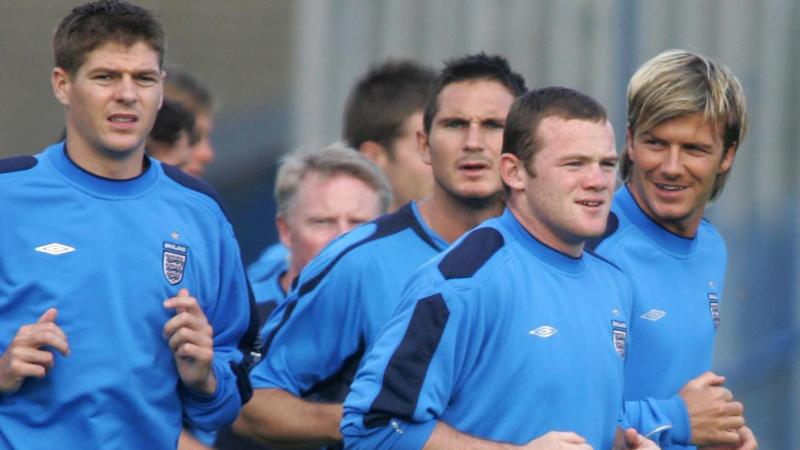
As England’s football history continues to reel under the memories of missed opportunities and what-ifs, the inquisition into why the so-called ‘Golden Generation’ failed to capture major international trophies continues to be a topic of passionate discourse both in pubs and among pundits. Spanning the early 2000s, this era of English football boasted of talents such as David Beckham, Steven Gerrard, Frank Lampard, and Wayne Rooney. These players dominated the domestic and European scenes, yet when donned in the national team’s colors, the success they achieved at club level eluded them on the international stage.
The term 'Golden Generation' was coined with optimistic foresight. It suggested a bright future, illuminated by the trophies and accolades expected to flood in. Excitement reached fever pitch as these players began to make their mark, yet, despite such high hopes, England’s campaign in major tournaments often ended in despair - sometimes cruelly on penalties, as seen in the 2006 World Cup against Portugal.
One primary argument that emerges when dissecting their underachievement at international tournaments is tactical inflexibility. Coaches during this period, including Sven-Göran Eriksson and Fabio Capello, often struggled with fitting multiple star players into a cohesive unit. The challenge was most evident in midfield. Lampard and Gerrard, both dynamic and attacking midfielders for their clubs, were frequently played together in roles that neither were accustomed to, leading to them negating each other's effectiveness.
The presence of a fixed tactical system that did not adapt or utilize the strengths of these generational talents also contributed to the stifling of potential. It was a classic case of having all the right pieces but not knowing quite how to fit them together to complete the puzzle. For instance, Paul Scholes, one of the finest midfielders of his generation, was often shunted out to the left wing to accommodate others in the center, a misuse of his natural abilities that could have otherwise influenced games more effectively from his preferred central position.
Critics have also pointed to the managerial decisions that sometimes seemed out of touch with the demands of modern football. The rigorous, often punishing, English league system did not help either, with little winter break, which left players drained and fatigued when summer tournaments rolled around. This physical and mental weariness was often cited as a reason for England's lackluster performances in late stages of tournaments.
Moreover, the pressures of expectation weighed heavily. The relentless media spotlight and the burden of a nation's dreams created an environment fraught with tension. Players have spoken about the intense scrutiny and the sometimes divisive nature of the coverage, which did not foster a conducive atmosphere for unity and team cohesion.
There’s also an argument to be made about the sheer quality of opposition. During the early to mid-2000s, international football was not short of other phenomenal teams. France, Brazil, Italy, Spain, and Germany, among others, were at or near their peaks. The global competitiveness of the sport was arguably at an all-time high, which further complicated England’s quest for glory.
Despite the disappointments, the golden generation has paved the way for the new waves of talent that believe in the possibility of international success. Lessons learned from the past have slowly been integrated into England's footballing strategy, as seen in their recent semi-final runs in the 2018 World Cup and 2021 Euro Championship. The focus has shifted towards building a more cohesive team unit rather than merely assembling star players, underlining the evolution in tactical and strategic thinking within English football.
In retrospect, while the 'Golden Generation' may not have returned with trophies, their legacy is more nuanced than it seems. It's a tale rich with lessons, a preparation for success that now seems closer within reach, thanks to the groundwork laid during their time. Revisiting these past chapters is not just an exercise in what went wrong, but more importantly, how it set the stage for potential future victories.