Did VAR Rob Celtic in Controversial Loss to Braga?

– 2 min read

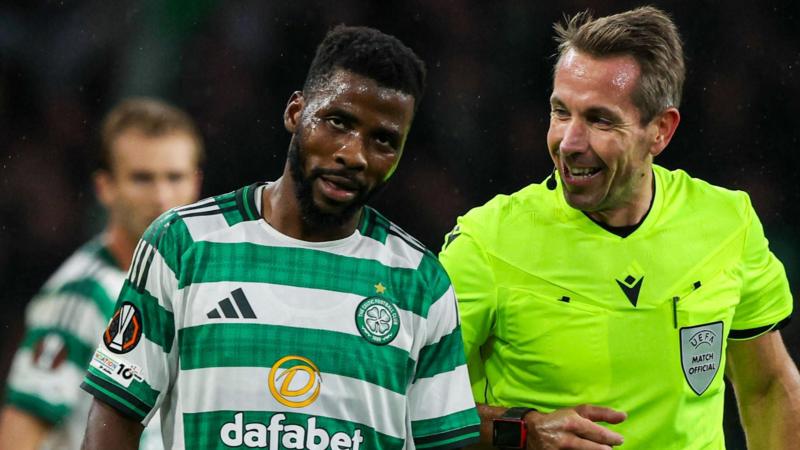
In the world of football, controversy never seems far away, and Celtic's recent clash with Sporting Braga in the UEFA Europa League was no exception. During a crucial incident in the match, Celtic thought they had broken the deadlock, only for their celebrations to be cut short when the goal was disallowed, leading to much frustration and debate.
The flashpoint came midway through the game. Celtic's striker, caught in a high-stakes duel with Braga's defense, managed to find the back of the net in what appeared to be a fine display of skill and determination. However, the referee, consulting with VAR, ruled it out for offside—a decision that didn't sit well with the Celtic players and their fervent supporters.
What followed was a game riddled with tension and relentless but ultimately fruitless pursuit of a goal by Celtic. Despite their dominance in possession and attempts on goal, the scoreboard showed 0-0 as the final whistle blew. This result did nothing to soothe the sense of injustice felt amongst the Celtic ranks.
Looking at the fateful decision more closely, video replays showed that it was indeed a borderline offside call. The advanced replay technology showed the smallest of margins—an arm, perhaps, just ahead of the last defender. According to the current laws of the game, this is enough to be flagged offside. The technology, designed to assist referees in making accurate decisions, did just that, but it still left a bitter taste due to the extremely tight nature of the call.
This scenario begs several questions. Was it simply a harsh but fair application of the rules? Could Celtic blame the technology or rules designed for precision in a sport famously full of chaotic, heart-stopping moments?
Additionally, this contentious decision could be seen as a wakeup call for Celtic. Depending solely on a singular moment that went awry due to a technicality might suggest broader issues in converting dominant play into scored goals. Football, as any fan knows, can be supremely unforgiving. Dominating possession and shot counts amounts to little without the ability to seal the deal.
Moreover, dissecting Celtic’s tactical approach post the disallowed goal offers insights into their strategy under pressure. Did they diversify their attack sufficiently? Was there an over-reliance on certain players or tactics which Braga had decoded? Their response to adversity—whether they could pivot and innovate on-the-fly—obviously came up short.
Celtic’s Head Coach might need to reflect on these execution aspects. It’s one thing for teams to complain about refereeing decisions; it’s entirely another to learn from those experiences and adjust. In modern football, adaptability and mental resilience are as crucial as physical skill and teamwork. Therefore, Celtic’s coaching staff should likely focus on enhancing strategic flexibility and mental toughness alongside disputing contentious decisions.
So, as the dust settles on yet another fiery contest in European football, both players and fans are reminded of the game's often cruel nuances. While it's vital to advocate for fairness and accuracy in refereeing, it's equally important to continually evolve and address any gaps in performance laid bare by adversities during the game. As Celtic look forward, the challenge will be how they can take control of their destiny, irrespective of the hurdles they might face—whether these be tough opponents or tough decisions. Thus, the path ahead for Celtic is clear; refine, evolve, and above all, keep the spirit of the beautiful game alive in their play.