Could International League Games Shatter Traditional Football?

– 3 min read

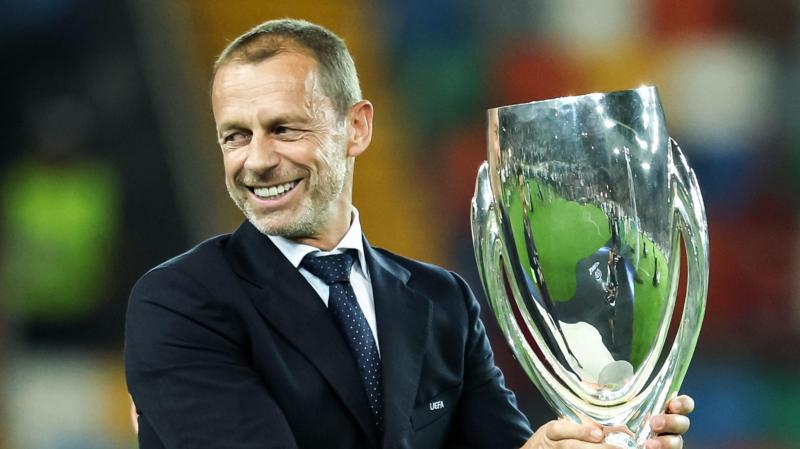
In a recent spirited discussion with officials from various European clubs, UEFA President Aleksander Ceferin made a compelling argument emphasizing that football transcends the mere mechanics of financial statements and balance sheets. This assertion comes at a critical time when football clubs are not only battling for supremacy on the field but are also navigating the complex currents of financial sustainability.
Ceferin’s message is clear — while financial health is undeniably crucial for the survival and success of clubs, the essence and spirit of football lie in its ability to unify cultures, inspire communities, and ignite passions across the globe. This sport, more than being a business, is a cultural phenomenon that reaches deep into the societal fabric, shaping identities and experiences.
Historically, football has played much more than the role of a common game. It has acted as a social glue in tough times, a point of communal pride, and even a diplomatic tool easing conflicted relationships between nations. The UEFA President's remarks remind us of the sport’s larger social responsibility and its potential to influence and impact beyond the pitch.
In recent years, the business aspect of football has indeed grown significantly, with clubs turning into global enterprises. The influx of massive TV rights deals, sponsorship agreements, and merchandising has changed the financial landscape of football. Clubs like Real Madrid, Manchester United, and Barcelona have been at the forefront, setting examples of how to run profitable ventures while maintaining competitive teams. However, this intensified commercialization has also led football into some murky waters, including issues like the European Super League fiasco which threatened the very democratic fabric of the competition by favoring the richer clubs.
The conversation around financial transparency and sustainability in football is not new. UEFA itself has been instrumental in implementing Financial Fair Play (FFP) regulations aimed at preventing clubs from spending beyond their means. However, Ceferin’s recent statements add a new dimension to the narrative, highlighting the importance of preserving the game's integrity and its roots in community and history.
Moreover, his views come at a time when football clubs are increasingly becoming aware of their social responsibilities. Many clubs have intensified their community engagement efforts, from setting up foundations to support local causes to engaging in global charity activities. For instance, FC Barcelona’s foundation works extensively in the area of child welfare, and Liverpool’s involvement in the local community is well ingrained into the club's ethos.
Ceferin’s emphasis on not getting too tethered to balance sheets also taps into the need for sustainability in football—both in financial and environmental terms. The sport's impact on the environment is now under greater scrutiny, and practices aiming at making large scale events carbon neutral are gaining ground. Clubs are exploring innovative ways to reduce their carbon footprints, from utilizing renewable energy in their stadiums to major transport-related changes on match days.
These visions outlined by Ceferin encourage a holistic approach to club management, where financial strategies are balanced with commitments to heritage, community involvement, and environmental sustainability. The challenge, therefore, lies in finding the golden mean where clubs can be financially robust but not at the expense of the game’s broader societal impact.
In bringing to the forefront the essential values of football, Ceferin not only reaffirms UEFA’s commitment to the spirit of the game but also prompts club officials to think deeply about their operational models. The future of football seems to pivot on the crucial balance between economic interests and its role as a global unifier. As clubs and governing bodies navigate this complexity, the hope is that the essence of football as a sport for all remains intact, staying true to its roots and mesmerizing millions around the world.