Arsenal Eyes Wembley Shift for Massive Emirates Stadium Expansion

– 2 min read

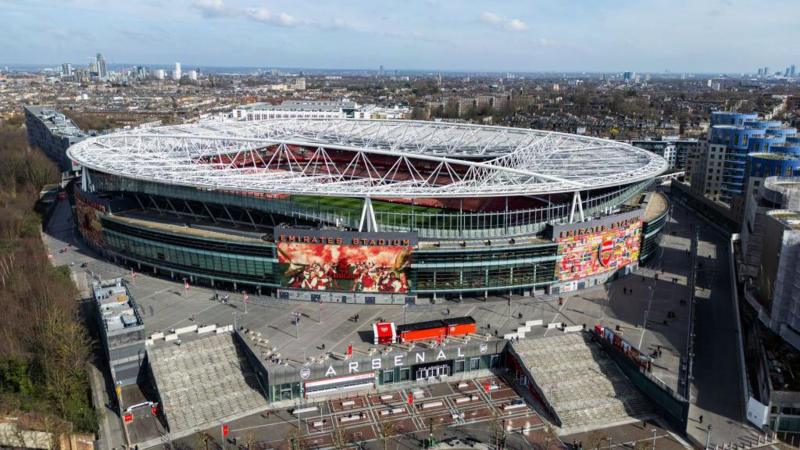
Arsenal Football Club, the esteemed Premier League outfit based in North London, is actively exploring options to expand the seating capacity of its iconic Emirates Stadium. Home to the Gunners since its inauguration in 2006, the stadium currently hosts a crowd of just over 60,000 spectators but could see an increase if plans discussed internally come to fruition.
The idea behind this expansion is not just about increasing the number of spectators; it's about enhancing fan experience and solidifying Arsenal's status as a top-tier football club. Emirates Stadium, known for its modern facilities and unique architecture, stands as the fourth-largest football venue in England, following behemoths like Old Trafford and Wembley Stadium. An increase in capacity could potentially elevate it higher on this prestigious list.
Expanding a stadium is no small task and involves careful consideration of logistical, regulatory, and financial aspects. For Arsenal, each of these facets has its own significance, given the club's location in the densely populated area of Islington. The infrastructure needs, the impact on local traffic and transport, the environmental considerations, and, importantly, the fan's matchday experience are all on the table for assessment.
Arsenal’s move to the Emirates from Highbury in 2006 was a significant step underpinning their ambition to compete at the highest level, not just in England, but in European football. The Emirates Stadium was part of a broader strategy to generate higher revenue through larger attendance and improved facilities. More seats could translate to more fans and a more vibrant atmosphere on match days, potentially increasing match-day revenues from ticket sales, merchandise, and concessions.
Moreover, with Arsenal consistently participating in international competitions such as the UEFA Europa League, and aiming for a Champions League spot, the demand for tickets often exceeds supply. Expanding the stadium would not only address this demand but could also strengthen Arsenal’s bid in their ongoing quest for top domestic and European honors.
However, the expansion consideration is also reflective of a broader trend wherein clubs are continuously adapting their homes to meet growing fan bases and technological advancements. Tottenham Hotspur, Arsenal's North London rivals, recently moved into a new stadium with a capacity of over 62,000, featuring state-of-the-art facilities. Additionally, Chelsea and Liverpool have also embarked on or are planning significant developments to their historical grounds.
For fans, the prospect of an expanded Emirates Stadium is tantalizing. It promises improved visibility and comfort, potentially more diverse food and beverage options, and an enhanced overall matchday ambiance. Clubs around the world are increasingly focusing on improving the spectator experience, integrating technology for smoother entry, better connectivity, and even virtual reality experiences that bring fans closer to the action when they can't be there in person.
Internally, discussions at Arsenal will also cover the need to maintain the unique atmosphere that the Emirates is known for. The acoustics, sightlines, and ease of access all contribute to the overall experience of a game. Any expansion will seek not only to preserve but to enhance these elements to ensure that the stadium’s atmosphere continues to be one of the best in England.
In conclusion, while the expansion of Emirates Stadium is still in the discussion phase, the implications for Arsenal and its fanbase are profound. It symbolizes a commitment to growth and competitiveness, ensuring that the club continues to evolve in alignment with the modern demands of global football. Fans will undoubtedly keep a keen eye on developments, hopeful that these discussions turn into concrete plans that bring even more exhilarating football experiences in the years to come.