Amorim Admits: No Escaping the Consequences of Results

– 3 min read

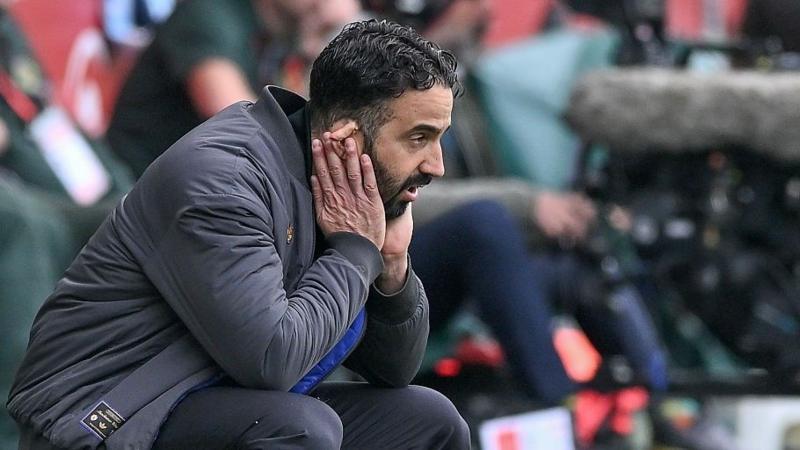
Ruben Amorim, the head coach of Manchester United, has openly acknowledged his struggling performance since taking the helm at one of the world’s most illustrious football clubs. Known for his tactical acumen and having previously impressed at Sporting Lisbon, where he secured two Portuguese Cups, expectations were sky-high when Amorim stepped into Old Trafford. However, the reality of his tenure has not yet matched the initial hype, and critiques, especially from former club legends, have been intensifying.
Since the inception of his career at Manchester United, Amorim's strategic choices have come under scrutiny, with several pundits and fans questioning his match-day tactics and player selection. Despite a roster brimming with talent, the team has displayed inconsistent performances, often struggling to dominate in matches where they were expected to shine. This inconsistency is at the heart of the critiques from former Manchester United players, who uphold the club's storied legacy of success and resilience.
Amorim’s approach has always been progressive, favoring a dynamic style of play, which he executed with considerable success at Sporting. However, adapting this style to the Premier League, known for its intense pace and physicality, has proved challenging. The expectation was that Amorim's youthful zest and innovative tactics would breathe new life into Manchester United, yet the adaptation process appears slower than many had hoped.
Transition periods at big clubs like Manchester United are nothing new, and they often come with their fair share of scrutiny. The pressure to perform and deliver trophies is immense, given the club’s historical dominance both domestically and in European competitions. Criticism from club legends, who have been part of Manchester United's most triumphant eras, highlights the high standards and expectations entrenched within the club culture. Icons such as Paul Scholes, Roy Keane, and Gary Neville have often been vocal about the club's performances, serving as custodians of its competitive spirit.
Amorim’s candidness about his record signals a recognition of the challenges he faces. This acknowledgement is not a sign of weakness but rather an indication of his willingness to address the issues head-on. Learning from criticism and adapting is essential, and Amorim seems prepared to evolve his tactics and approach to meet the rigorous demands of English football.
Moreover, the broader context of football management today shows that even the most successful coaches need time to imprint their philosophy and achieve synergy among their squad. Legendary Manchester United manager Sir Alex Ferguson, for instance, did not secure any major silverware until his fourth season in charge. While contemporary football may be less patient, the principle that managers need time to build a winning team still holds true.
In terms of moving forward and turning the tide, Amorim will have to be strategic about his next steps. Strengthening the squad through tactical refinement and perhaps during the transfer windows will be crucial. Additionally, fostering a resilient mindset among the players will be key to overcoming the intense scrutiny and pressure that comes with wearing the Manchester United jersey.
Fans and critics alike will be watching closely to see if Amorim can chart a course correction that steers Manchester United back to its accustomed place at the pinnacle of English and European football. As the season progresses, it will become increasingly clear if Amorim’s methods are bearing fruit or if further changes are needed.
Understanding Amorim’s acknowledgement of his record as a humble step rather than a defeatist admission might be the key in rallying both player and fan support. In a club as storied as Manchester United, acknowledging the past heroes while forging a new path forward is an intricate dance between respect and innovation. With a clear vision and a united team, the possibilities remain vast for Amorim's Manchester United.